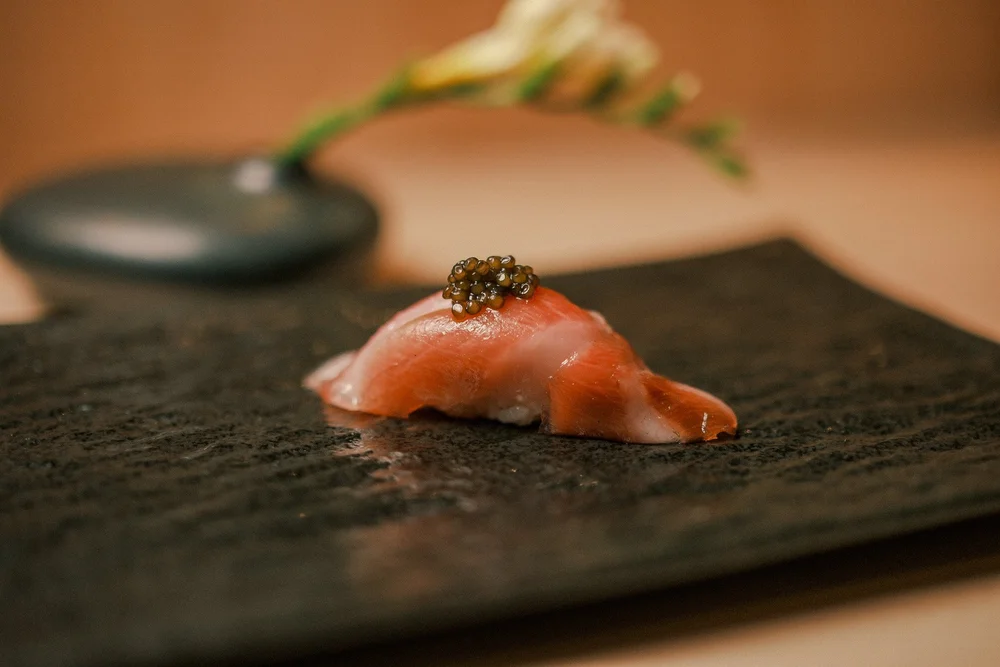
In Japanese cuisine, shun (&旬;) refers to the moment when an ingredient is at its absolute peak — the season when its flavor, texture, and fat content are at their best. At Atto Sushi, seasonality isn’t a marketing concept; it’s the organizing principle of every omakase. The chef builds each tasting around what is in shun, which is why no two visits are exactly alike.
Here is a guide to what you can expect at the sushi counter as the seasons change.
Spring (March – May)
Spring is a season of lightness and renewal at the sushi counter. The fish that come into season reflect this — delicate, clean, and bright.
- Sayori (Needlefish) — One of the most elegant spring fish. Translucent, delicate flesh with a clean sweetness. Often served with a tiny strip of shiso leaf.
- Shirauo (Whitebait) — Tiny, translucent fish that appear in early spring. Delicate and ephemeral — a true seasonal marker.
- Tai (Sea Bream) — At its fattest in spring as it prepares for spawning. The increased fat content makes spring tai particularly sweet and rich. One of the best candidates for dry-aging.
- Hotaru Ika (Firefly Squid) — Available only in spring, harvested from Toyama Bay. Small, tender, with a slightly briny sweetness.
Summer (June – August)
Summer brings bold, assertive flavors. The fish are leaner but intensely flavorful, and certain premium ingredients reach their absolute peak.
- Aji (Horse Mackerel) — A quintessential summer fish and a classic of Edomae sushi. Best served with freshly grated ginger and scallion. Even one day of aging enhances its natural sweetness.
- Anago (Sea Eel) — Summer is peak anago season. Simmered in our house nitsume (sweet soy glaze), it becomes meltingly tender with a deep, caramelized sweetness.
- Uni (Sea Urchin) — Hokkaido uni reaches its peak in summer, with a rich, creamy, sweet-briny flavor that is difficult to describe and impossible to forget.
- Iwashi (Sardine) — Often overlooked, summer sardine is fatty, rich, and deeply flavorful. A favorite of sushi connoisseurs who appreciate bold, unapologetic taste.
Fall (September – November)
Fall is many sushi chefs’ favorite season. The fish are fattening for winter, developing rich flavors and luscious textures.
- Sanma (Pacific Saury) — Known as “the taste of autumn” in Japan. Fatty, rich, and intensely savory. Its arrival at the market signals the start of fall. Lightly seared or served as sashimi with citrus.
- Sake (Salmon) — Fall salmon from Hokkaido is at peak fat content. The flesh is deep orange, rich, and buttery.
- Saba (Mackerel) — Fall mackerel, especially from Kyushu, is prized for its high fat content. Traditionally cured with salt and vinegar (shime saba) in the Edomae style.
- Ikura (Salmon Roe) — Fresh ikura season begins in fall. The eggs are plump, bright orange, and burst with a clean, briny sweetness that bottled ikura cannot match.
Winter (December – February)
Winter is the season of richness. Fish have stored maximum fat reserves, and cold ocean temperatures produce firm, clean-tasting flesh.
- Buri (Yellowtail) — Winter buri, known as “kan-buri,” is at peak fat — rich, buttery, and deeply satisfying. One of the most prized winter fish in Japanese cuisine.
- Hirame (Fluke) — Cold-water hirame is firm, sweet, and incredibly clean. Dry-aged for three to five days, it develops a subtle sweetness and refined umami that makes it one of our favorite winter preparations.
- Tara (Cod) — Winter cod is mild, sweet, and delicate. Often served as shirako (cod milt) — an acquired taste and a winter luxury.
- Fugu (Pufferfish) — The ultimate winter delicacy. Translucent, firm flesh with a clean, subtle flavor and a distinctive texture. Available only from licensed preparers.
Why Seasonality Matters for Omakase
When you sit at an omakase counter, you’re not ordering from a fixed menu. The chef is composing your meal in real time, selecting from what is best right now. This is why the same restaurant can offer a completely different experience in April versus October.
At Atto Sushi, our chef works with seasonal availability and dry-aging timelines simultaneously. A fish that arrives on Monday may not be served until Thursday or Friday, depending on when it reaches peak flavor. The omakase you experience is the intersection of what’s in season, what’s been properly aged, and the chef’s judgment about how to compose a balanced progression of flavors.
This is what makes omakase the most personal form of sushi — and why we believe it’s worth trusting the chef.
Taste what’s in season at Atto Sushi. Reserve on Resy or learn more about the omakase experience.