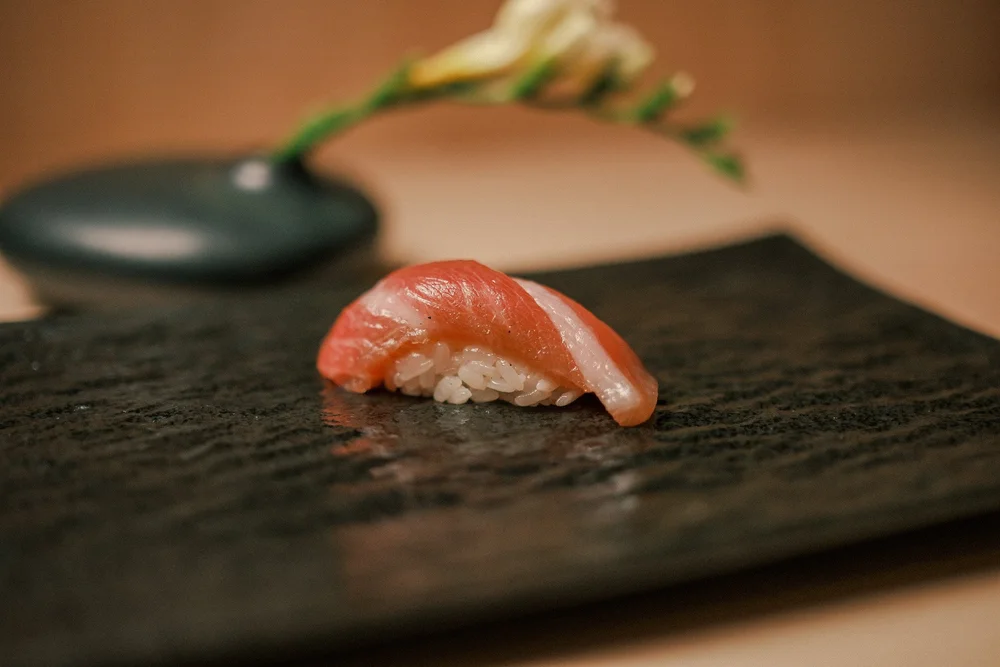
Walk into most sushi restaurants in America and you’ll find salmon rolls, spicy tuna, and fish served as fresh as possible. This is modern sushi — and there’s nothing wrong with it. But it represents only one branch of a tradition that goes back over two hundred years. The other branch — Edomae sushi — is a fundamentally different approach to the craft, and it’s the tradition that Atto Sushi draws from.
What Is Edomae Sushi?
Edomae (江戸前) literally means “in front of Edo” — referring to the fish caught in Tokyo Bay (Edo was the old name for Tokyo). In the early 1800s, sushi chefs in Edo developed a style of sushi built around preservation techniques. Without refrigeration, they needed ways to keep fish safe to eat and delicious over time.
What they discovered was that these preservation techniques didn’t just extend shelf life — they improved flavor. Each technique brought out different qualities in the fish, creating a complexity that raw, fresh fish on its own couldn’t achieve.
Traditional Edomae Techniques
Each technique in the Edomae repertoire serves a specific purpose:
- Shimesaba (Vinegar Curing) — Mackerel is cured first in salt, then in rice vinegar. The salt draws out moisture and firms the flesh; the vinegar adds brightness and acts as a preservative. The result is mackerel with a clean, tangy flavor and a firmer texture than fresh.
- Shio-jime (Salt Curing) — Fish is salted for a specific duration to draw out excess moisture, concentrate flavor, and slightly firm the texture. The amount of salt and the duration vary by species — a few minutes for delicate white fish, hours for richer varieties.
- Kobujime (Kombu Aging) — Fish is wrapped in kombu (dried kelp) for hours or days. The kombu draws moisture from the fish while infusing it with glutamate, one of the key umami compounds. This is perhaps the most elegant Edomae technique — the fish becomes more flavorful and more tender simultaneously.
- Nitsume (Simmering in Broth) — Used primarily for anago (sea eel), which is simmered in a sweetened soy broth until tender, then glazed. The nitsume sauce is often built up over months or years, gaining depth with each batch. A great nitsume is a sushi restaurant’s secret weapon.
- Zuke (Soy Marination) — Tuna is briefly marinated in soy sauce. Originally a preservation method, zuke produces a deeper color, richer flavor, and a subtle seasoning that eliminates the need for additional soy sauce at the table.
- Dry-Aging — The technique most central to Atto Sushi. Fish is aged in controlled conditions so enzymatic processes — ATP breaking down through IMP (inosinate), and muscle proteins releasing free amino acids like glutamate — can develop layered umami and a yielding texture. Read the full science →
The Purpose Beyond Preservation
What makes Edomae sushi more than just “preserved fish” is the chef’s intention. Each technique is chosen to enhance the natural character of a specific fish. Vinegar brightens mackerel’s richness. Kombu deepens white fish’s subtlety. Dry-aging unlocks tuna’s hidden umami. The chef isn’t just keeping the fish safe — they’re composing flavor.
This is why Edomae sushi is sometimes called “prepared sushi.” Every piece has been worked on by the chef before it reaches the counter — sometimes for days. The moment of service is the culmination of a process that began long before you sat down.
How Modern Sushi Evolved
The invention of modern refrigeration in the 20th century changed everything. Suddenly, fish could be kept fresh for days without any preparation. The need for preservation techniques disappeared, and with it, many of the techniques themselves.
Modern sushi prioritized freshness above all else. Salmon — a fish that traditional Edomae chefs never used (it wasn’t caught in Tokyo Bay and wasn’t suited to traditional techniques) — became one of the most popular sushi fish worldwide. Rolls, invented largely for American palates, introduced combinations of flavors and textures that traditional sushi never attempted.
None of this is inherently bad. Modern sushi expanded the audience for Japanese cuisine and made sushi one of the world’s most popular foods. But something was lost in the transition.
What Was Lost
When “fresh” became the only standard, the complexity that came from traditional preparation techniques largely disappeared. The deep umami of properly aged fish, the tangy brightness of vinegar-cured mackerel, the subtle glutamate infusion of kombu-wrapped white fish — these flavors require time, technique, and patience that a “fresh-only” approach simply cannot produce.
The craft aspect was diminished too. In traditional Edomae sushi, the chef’s skill is demonstrated not just in cutting and shaping, but in the days of preparation that precede service. The aging, curing, and marinating are where the real artistry lives.
Atto Sushi’s Approach
At Atto Sushi, we bridge these two traditions. Our program draws on Edomae-inspired aging and curing techniques, refined with modern refrigeration and temperature control that Edo-period masters could never have imagined. We use kombu aging, salt curing, and nitsume alongside modern dry-aging methods.
We also serve some fish fresh — because not every fish benefits from aging, and knowing the difference is part of the craft. A great omakase counter should offer both: the clean brightness of fresh uni alongside the deep complexity of seven-day-aged otoro.
Understanding this distinction — the interplay between fresh and aged, between modern technique and Edomae tradition — is what makes sitting at a sushi counter such a rewarding experience. You’re not just eating fish. You’re tasting centuries of accumulated knowledge, applied to the best ingredients available today.
Experience Edomae tradition at Atto Sushi. Reserve on Resy or learn more about the science of dry-aging.