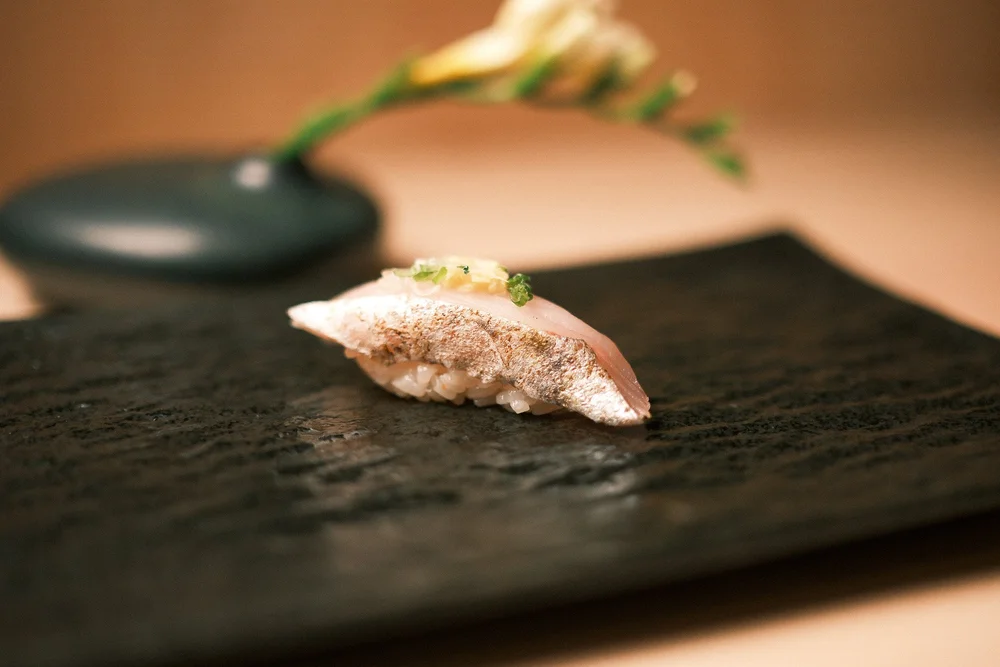
If you’re sitting at an omakase counter for the first time, it’s natural to wonder about the customs. The good news: the most important rule is simply to enjoy yourself. But a few tips can help you get the most out of the experience.
What “Omakase” Really Means
Omakase (お任せ) literally means “I leave it up to you.” When you order omakase, you’re placing your trust in the chef to curate the best possible meal based on what’s available that day. Unlike a standard prix fixe menu, omakase follows a chef-guided progression that may shift with seasonality, sourcing, and the day’s best fish — the chef composes your meal in real time, reading the ingredients, the season, and sometimes even your reactions to previous courses.
This trust is the foundation of the omakase experience. The more you embrace it, the more rewarding the meal becomes.
Before You Arrive
- Avoid strong fragrances. Perfume, cologne, and scented lotions can interfere with the delicate aromas of the fish. At a sushi counter, your nose is as important as your palate.
- Arrive on time. Omakase is paced carefully. Arriving late disrupts the rhythm for the entire counter. We recommend arriving 10 minutes early.
- Mention dietary restrictions at booking. The chef can plan around allergies and restrictions, but needs advance notice to do so effectively.
At the Counter
Eating Each Course
The chef will place each piece before you and often explain what it is, where it’s from, and how it was prepared. A few guidelines:
- Eat within 30 seconds of receiving. Temperature matters enormously in sushi. The rice is warm, the fish is cool — that contrast is intentional and fades quickly.
- Hands or chopsticks — both are correct. In traditional Edomae sushi, eating nigiri with your hands is perfectly acceptable and even preferred by many. Use whichever method feels natural.
- Don’t drown the sushi in soy sauce. The chef has already seasoned each piece with the appropriate amount of soy sauce, salt, or citrus. If a small dish of soy sauce is provided, use it sparingly — a light touch on the fish side, never the rice.
- Eat nigiri in one bite. Each piece is composed as a single unit of flavor and texture. Biting it in half changes the experience.
The Progression
Traditionally, an omakase is composed like music — with a deliberate arc that often begins with lighter, more delicate flavors (white fish, shellfish) and moves toward richer, more umami-forward pieces (tuna, aged fish, uni), sometimes finishing with tamago (sweet egg) and seasonal fruit.
That said, every omakase counter shapes its own arc. At Atto Sushi, the chef composes each progression around what’s in season, what’s been carefully aged to peak, and how the meal is unfolding for the guests at the counter. Our omakase 13 is 1 appetizer, 10 pieces of nigiri, and dessert; the omakase 17 expands that to 2 appetizers, 12 pieces of nigiri, miso soup, and dessert.
Interacting with the Chef
The counter is an intimate space, and conversation is welcome. Ask about the fish, the aging process, where something was sourced, or what sake pairs well with a particular course. Most sushi chefs love sharing their knowledge.
That said, read the room. If the chef is in the middle of a delicate preparation, a quiet pause shows respect for the craft. If the counter is lively, lean into the conversation.
Photography
A quick photo of each course is generally fine — many guests want to remember the experience. But keep it brief. The goal is to be present at the counter, not behind a screen. And remember the 30-second rule: eat first, then reflect.
Tipping and Duration
Standard tipping applies: 18–20% gratuity is customary. The pace of the meal is set by the chef — both lunch and dinner omakase at Atto Sushi run approximately 90 minutes. Relax and let the rhythm unfold.
The Only Real Rule
Enjoy the experience. Omakase is one of the most personal forms of dining — a chef preparing food for you, right in front of you, based on what is best today. The etiquette exists to help you get the most out of that moment, not to create anxiety about doing something wrong.
Ready for the counter? Reserve your omakase on Resy or learn about what to expect at Atto Sushi.